10 Thai Cooking Mistakes Westerners Make (And How to Fix Them)
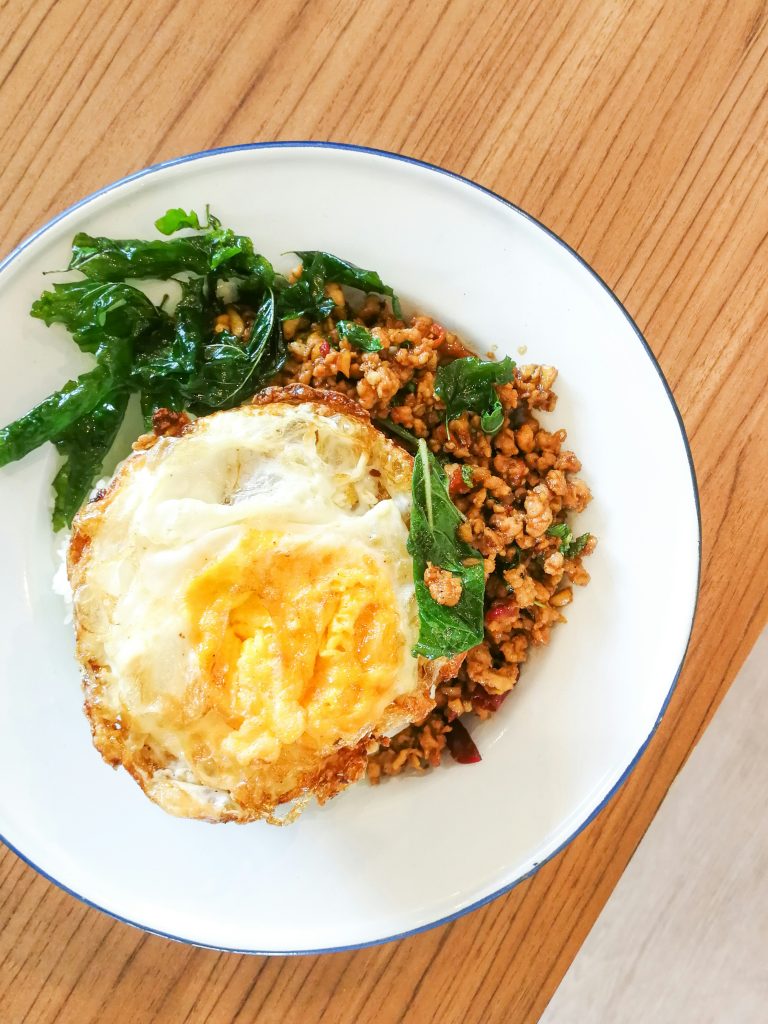
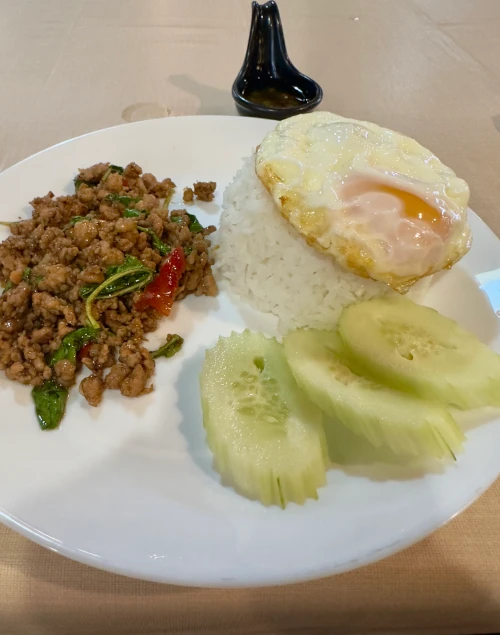
I’ve spent more than fifteen years living, eating, and cooking across Thailand — in home kitchens in Chiang Mai, at morning markets in Isaan, in tiny restaurant kitchens along the Gulf coast. I’ve watched Thai grandmothers cook pad kra pao in under four minutes. I’ve also watched dozens of enthusiastic Western home cooks produce something that looks roughly right but tastes completely wrong.
The gap between the two is almost never about skill. It’s about a handful of specific, fixable mistakes.
I’m a farang — a foreigner — and that actually puts me in a useful position to write this. I had to learn everything that Thai cooks absorb from childhood. Every one of these mistakes, I made first. And fixing each one genuinely changed how my food tasted.
Here are the ten mistakes I see most often, and exactly how to correct them.
1. Using Italian Basil Instead of Thai Basil (or Holy Basil)
This is the single most common substitution, and it quietly destroys several dishes.
Italian basil and Thai basil look similar but behave completely differently under heat. Italian basil turns limp and bitter the moment it hits a hot pan. Thai sweet basil holds its structure and releases a faintly anise-like fragrance. Holy basil — the one you need for pad kra pao — has a peppery, clove-like intensity that is simply not replaceable.
The fix: Find an Asian grocery store and buy the real thing. Thai basil keeps well in the fridge wrapped in a damp paper towel. If you genuinely cannot find holy basil, use a small amount of Thai sweet basil plus a pinch of ground cloves — not perfect, but closer than Italian basil by a wide margin.
2. Burning the Aromatics
Lemongrass, galangal, shallots, kaffir lime leaves — these are the aromatic backbone of Thai cooking, and they are fragile. Most Western cooks, trained to sauté onions until soft and golden, apply the same logic here. That’s a mistake.
Thai aromatics don’t need to caramelize. They need to bloom — just long enough for the oil to capture their volatile fragrance before everything else goes in. Thirty seconds to a minute on medium-high heat. The moment you smell them, it’s time to move.
Burning them produces bitterness that no amount of fish sauce or lime juice can correct.
The fix: Keep your heat at medium-high, not screaming hot. Add aromatics, watch them, and move quickly. If your kitchen smells intensely fragrant within 45 seconds, you’re doing it right.
3. Skipping the Curry Paste Frying Step
This one costs more flavor than almost any other mistake.
When making any Thai curry, most recipes say “fry the curry paste before adding coconut milk.” Many cooks read this and give the paste about twenty seconds before pouring in the coconut milk. That is not enough.
Properly frying curry paste in oil — for two to three full minutes, stirring constantly — transforms it. The raw harshness of the chili and shrimp paste cooks out. The spices bloom. The color deepens. You end up with a base that is rich, rounded, and complex rather than sharp and one-dimensional.
The fix: Add your curry paste to oil over medium heat and fry it properly, stirring constantly, for at least two minutes. It will start sticking slightly and the oil will separate from the paste around the edges — that’s your signal it’s ready for the coconut milk.
4. Not Understanding the Five Flavors
Western cooking generally works with salt, sweet, acid, and fat. Thai cooking adds a fifth: funk — the deep umami savouriness that comes from fermented fish sauce and shrimp paste.
The real Thai cooking skill is not hitting any one of these notes loudly. It’s keeping all five in conversation with each other throughout the cooking process. A dish that’s too salty gets a squeeze of lime. A dish that’s too sour gets a pinch of palm sugar. You’re always adjusting, always tasting, always chasing balance.
Most Western cooks season at the end. In Thai cooking, you season throughout.
The fix: Taste at every stage. Keep fish sauce, lime juice, palm sugar, and fresh chili within reach. Think of your role as conductor, not just cook.
5. Using the Wrong Sugar
Recipes often say “sugar” without specifying which kind. White granulated sugar technically works, but palm sugar is what Thai cooking actually calls for — and the difference is significant.
Palm sugar is less sweet, more complex, with a faint caramel and floral note. It softens the flavor of a dish rather than sharpening it. White sugar sharpens everything and can make curries and stir-fries taste thin and slightly harsh.
The fix: Buy palm sugar from any Asian grocery store. It usually comes in hard discs or soft paste. Shave or crumble a small amount — it dissolves easily in the heat of cooking. If you can’t find it, light brown sugar or coconut sugar is the next best substitute.
6. Adding Coconut Milk Too Early to Curries
This connects to mistake #3 above. If you add coconut milk before the curry paste has properly fried, you’re essentially poaching the paste in liquid rather than building a cooked base. The result tastes raw and flat.
There’s a second error too: adding all the coconut milk at once. Thai cooks typically add a small amount first to loosen the fried paste, stir it in fully, then add the rest. This builds emulsification and produces a richer, more cohesive curry sauce.
The fix: Fry the paste in oil first (see mistake #3). Then add roughly a quarter of your coconut milk, stir until fully incorporated, and cook for another minute before adding the rest.
7. Overcrowding the Wok
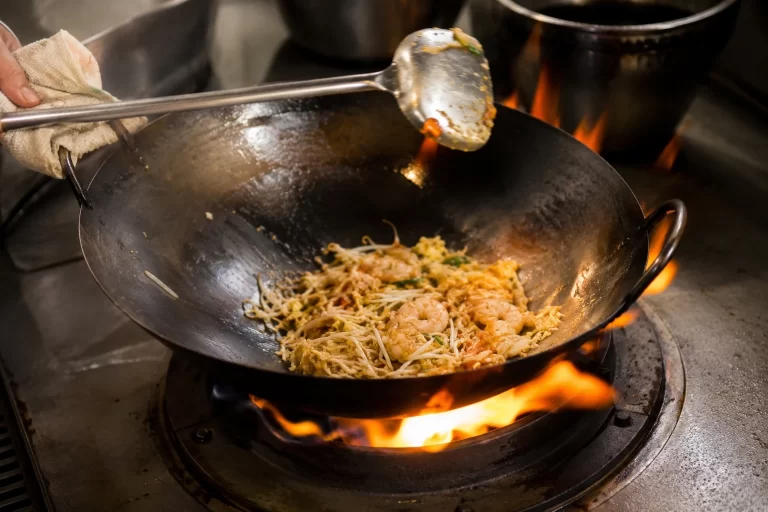
Thai stir-fries are cooked fast, over high heat, in small amounts. The moment you add too much to the pan, the temperature drops, steam builds up, and you’re no longer stir-frying — you’re stewing. The result is soft, waterlogged food with none of the caramelized edges that give Thai stir-fries their character.
This is also why Thai street food from a wok cooked over a gas flame powerful enough to roast you alive tastes different from home cooking. You can compensate somewhat, but not entirely.
The fix: Cook in smaller batches than you think necessary. A domestic hob and a 30cm wok work well for two portions. For four people, do two separate batches rather than one large one. Get the wok properly hot — smoking slightly — before anything goes in.
8. Treating Fish Sauce as a Salt Substitute
Fish sauce is not just salty. It carries deep fermented umami, a faint sweetness, and a complexity that table salt completely lacks. Using it carelessly — just adding splashes until something tastes salty — misses the point and often produces dishes that smell intensely of fish without actually tasting balanced.
Different fish sauces also vary significantly in quality. Cheap fish sauce can be harsh and overpowering. A high-quality fish sauce like Tiparos, Megachef, or Red Boat is noticeably more complex and far gentler in the final dish.
The fix: Buy good fish sauce. Use it thoughtfully — a small amount early in cooking to season the base, then adjust at the end if needed. Start with less than you think you need.
9. Ignoring Regional Differences
“Thai food” is not a single cuisine. It’s at least four distinct regional traditions that cook completely differently.
Northern Thai food (Chiang Mai, Chiang Rai) is herb-heavy, less coconut-forward, with dishes like khao soi and sai oua. Northeastern Thai — Isaan — is fermented, funky, and sour, built around sticky rice, larb, and som tum. Central Thai cooking is what most Westerners know: fragrant curries, pad thai, tom yum. Southern Thai food is the most intensely spiced, with turmeric, dried shrimp, and a level of heat that takes genuine adjustment.
Understanding which region a dish comes from helps you season and balance it correctly.
The fix: When you’re cooking a specific dish, look up which region it’s from. That context tells you whether you’re aiming for the bright fragrance of the north, the umami funk of the northeast, the balanced sweetness of central Thailand, or the burning intensity of the south.
10. Trying to Cook Thai Food Without Understanding the Pantry
The most common reason Thai food fails at home is that Western cooks try to reverse-engineer a dish from a recipe without understanding what the ingredients actually do. They substitute liberally, skip steps they don’t understand, and then wonder why the result tastes like a vague approximation.
Thai cooking makes sense once you understand the logic: aromatics build fragrance, fermented ingredients build depth, fresh herbs and citrus build brightness, and palm sugar ties everything together. Every ingredient has a specific job. Once you understand the jobs, you can substitute intelligently when needed.
The fix: Spend time learning the pantry before the recipes. What does galangal do that ginger doesn’t? Why kaffir lime leaf and not regular lime zest? Why shrimp paste and not just extra fish sauce? The answers to these questions are the foundation of real Thai cooking.
The Bigger Picture
These mistakes all share a common root: Thai cooking has its own internal logic, and it doesn’t map neatly onto Western cooking habits. The heat management is different. The seasoning timing is different. The flavour balance is different. The ingredients behave differently.
That’s not a reason to be intimidated. It’s a reason to learn properly rather than adapt impatiently.
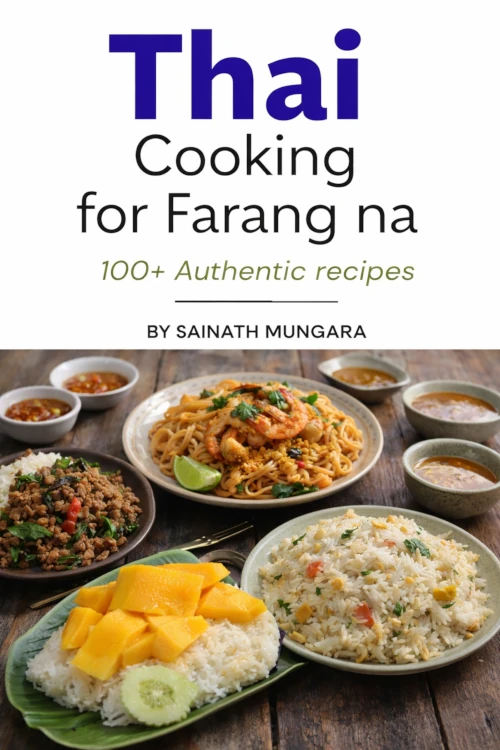
I wrote Thai Cooking for Farang Na specifically for cooks in this position — people outside Thailand who love the food and want to cook it authentically, but keep hitting the same walls. Every recipe in the book is built around these fundamentals, with the substitutions and adjustments explained so you understand why, not just what.
If you’ve been frustrated by Thai recipes that don’t quite work, the problem is almost certainly one of the ten issues above. Fix them, and the food changes significantly.
👉 Get Thai Cooking for Farang Na on Amazon — 100+ authentic recipes written for the non-Thai home cook.
Sainath Mungara is the author of Thai Cooking for Farang Na. He has lived and cooked across Thailand for over fifteen years.