Authentic Pad Thai Recipe — The Way Thais Actually Make It
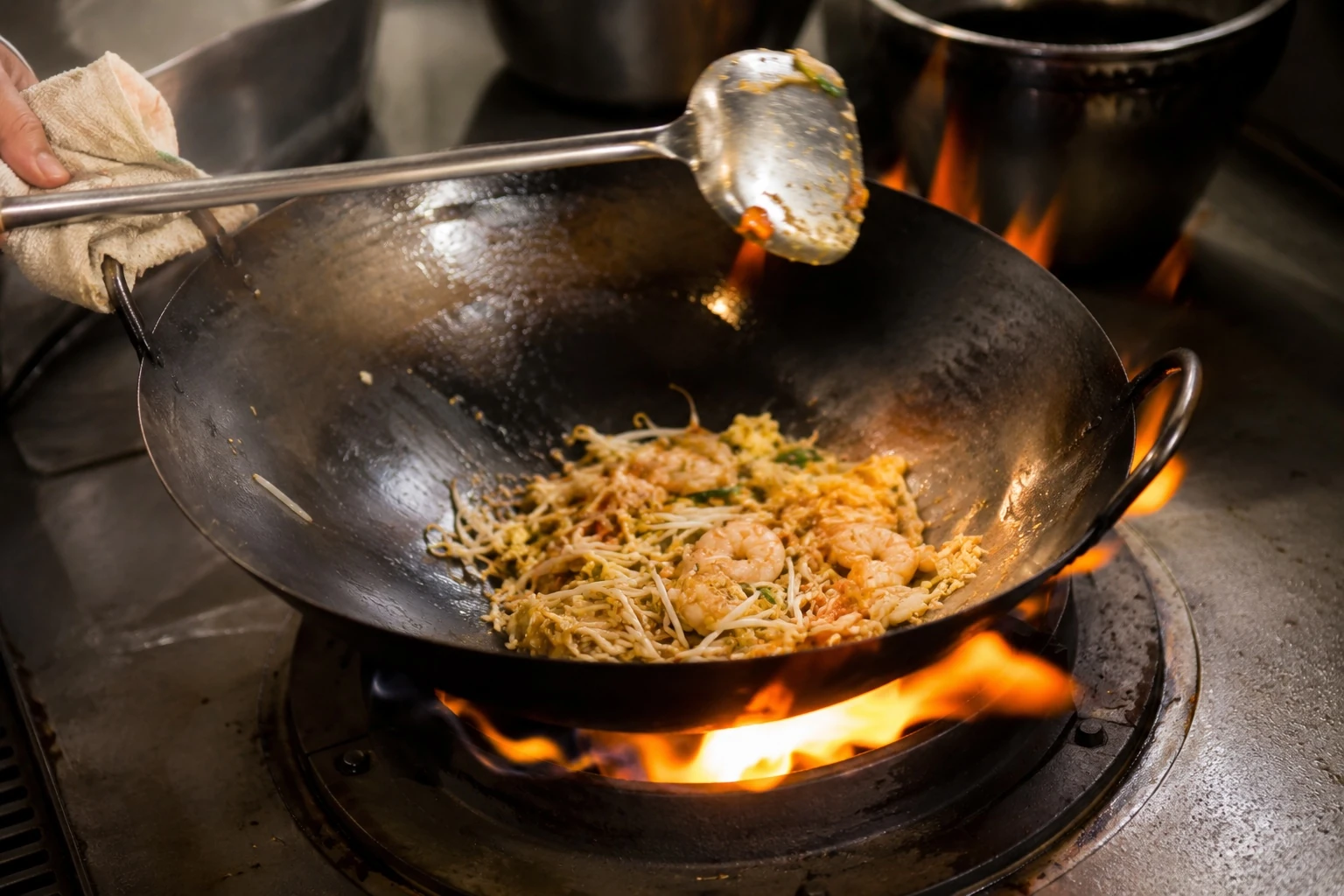
The first time I ordered pad thai in Thailand, I ate it standing at a roadside stall in Chiang Mai at seven in the morning. A woman no taller than my shoulder worked a blackened wok over a gas flame powerful enough to strip paint. She had a queue of eight people and she was taking no longer than three minutes per order.
What arrived in a paper wrapper was nothing like the orange, peanut-smothered dish I’d eaten in Thai restaurants back home. It was lighter. More complex. Faintly sour, deeply savory, with a fragrance that I spent the next several years trying to understand and then replicate.
I’m a farang — a foreigner — who spent fifteen years living, eating, and learning to cook across Thailand. Pad thai was one of the last dishes I felt I’d properly cracked, because it looks simple and isn’t. The technique is specific. The ingredients matter more than in almost any other Thai dish. And the sauce has a flavor logic that once you understand it, you can’t unknow.
This is the recipe I cook today. It works. Here’s how to make it.
What Makes Pad Thai Authentic (And Why Most Western Versions Miss)
Before the recipe, one important clarification.
What you get at most Western Thai restaurants is not authentic pad thai. It’s typically made with ketchup or sweet chili sauce instead of tamarind, white sugar instead of palm sugar, and cooked in batches so large the noodles steam rather than fry. The result is sweet, orange, and soft — recognizable, but a long way from the real thing.
Authentic pad thai has three non-negotiable ingredients in the sauce:
- Tamarind — provides a fruity sourness that nothing else replicates
- Palm sugar — rounds and deepens without the harsh sweetness of white sugar
- Fish sauce — the salty, fermented backbone of almost every Thai dish
That’s it. That trinity, balanced properly, is pad thai sauce. Everything else is garnish.
Ingredients (serves 2)
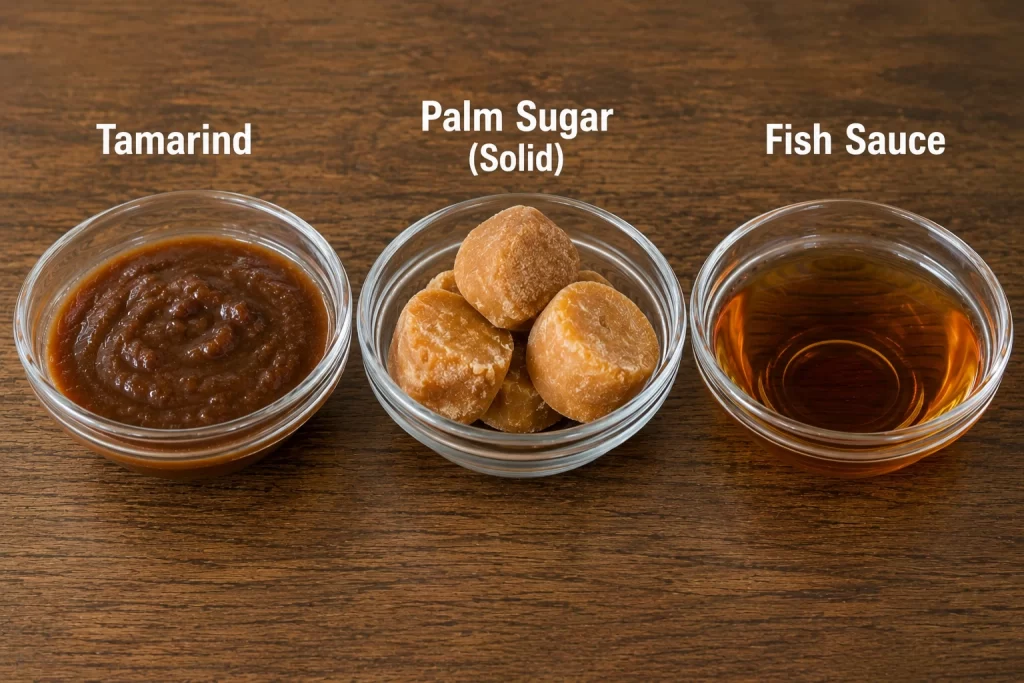
For the sauce (make this first)
- 3–4 tablespoons tamarind paste (Thai or Vietnamese — not Indian concentrate)
- 2 tablespoons palm sugar, shaved or crumbled
- 2 tablespoons good fish sauce (Tiparos, Megachef, or Red Boat)
- 1 tablespoon water
For the noodles
- 120g (4oz) dried flat rice noodles, medium width (sen lek)
- Soaked in room-temperature water for 45–60 minutes, then drained
For the stir-fry
- 2 tablespoons neutral oil (vegetable or rice bran)
- 2 cloves garlic, finely chopped
- 1 small shallot, finely sliced
- 150g (5oz) protein — prawns, chicken, firm tofu, or a combination
- 2 tablespoons dried shrimp (optional but adds authentic depth)
- 2 tablespoons salted preserved radish (chai poh), rinsed and roughly chopped
- 2 eggs
- Large handful bean sprouts
- 3–4 stems garlic chives, cut into 3cm lengths (or spring onion tops)
To serve
- Fresh bean sprouts
- Crushed roasted peanuts
- Lime wedges
- Dried chili flakes
- Extra fish sauce on the side
Method
Step 1: Make the sauce
This is the most important step and the one most recipes rush. Do it first, while everything else is cold.
In a small saucepan over medium heat, combine the tamarind paste, palm sugar, fish sauce, and water. Stir gently until the palm sugar fully dissolves — about 2 minutes. The sauce should taste sour first, then sweet, then salty, in that order. If it tastes too sour, add a small amount of palm sugar. Too flat? Add a few drops more fish sauce. Adjust now, not later.
Set aside.
Tamarind note for farang cooks: The single most common mistake I see is using Indian tamarind concentrate, which is thick, very dark, and extremely concentrated. Thai tamarind paste is a looser, brown liquid. If you use Indian concentrate, your sauce will be overwhelmingly sour and muddy-tasting. Buy a Thai brand — Cock Brand or A-Roy-D are reliable.
Step 2: Prepare the noodles correctly
Do not boil pad thai noodles. This is what makes them gummy and clumped.
Soak them in room-temperature water for 45–60 minutes until completely pliable but still with some resistance when you bite one. Drain well and keep them ready. They will finish cooking in the wok.
Step 3: Get your wok properly hot
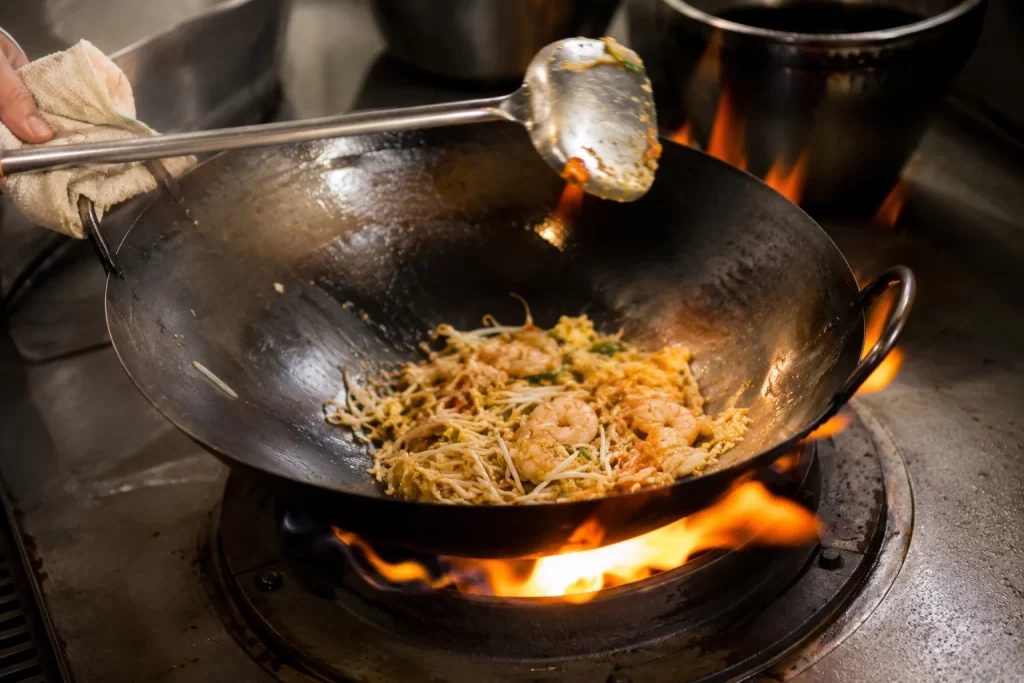
This step is non-negotiable. Put your wok or large heavy skillet over the highest heat your stove produces. Wait until it is smoking before adding oil. Crowding the wok or starting with insufficient heat produces waterlogged noodles.
Cook a maximum of 2 portions at a time. If cooking for 4, do two separate batches.
Step 4: Cook the protein and aromatics
Add oil to the hot wok. Add garlic and shallot and stir constantly for about 30 seconds — they should sizzle immediately and turn fragrant. Do not let them brown.
Add your protein and cook until just done:
– Prawns: 1–2 minutes until pink
– Chicken: 3–4 minutes until cooked through
– Tofu: 2–3 minutes until lightly golden
Add dried shrimp and preserved radish if using. Toss everything together for 30 seconds.
Step 5: Add the noodles and sauce
Add the drained noodles to the wok and spread them out. Pour the sauce over and toss everything together. The noodles should absorb the sauce within about 90 seconds. If they seem dry or are sticking, add a tablespoon of water and toss again.
Step 6: Add the eggs
Push everything to one side of the wok. Crack both eggs into the empty space and let them set slightly — about 15 seconds — before breaking the yolks and folding the egg through the noodles as it finishes cooking. You want streaks of cooked egg through the noodles, not completely scrambled.
Step 7: Add the vegetables and finish
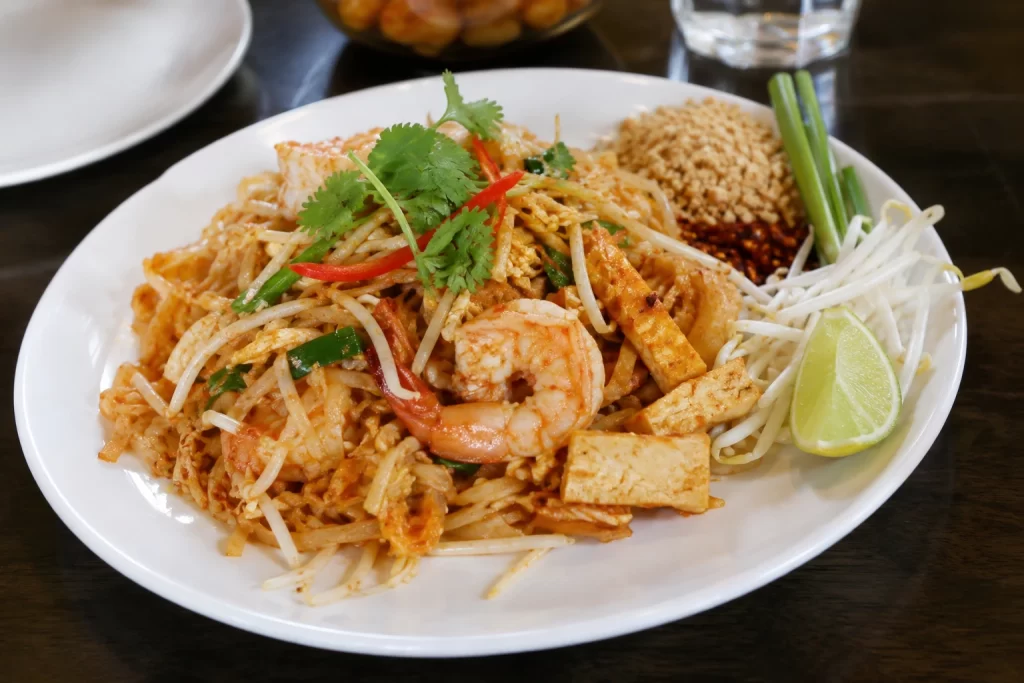
Add bean sprouts and garlic chives. Toss once or twice — you want the sprouts to retain their crunch, not go limp. Remove from heat immediately.
Taste one more time. Adjust with a small squeeze of lime, a few drops of fish sauce, or a pinch more chili.
Serve immediately, with garnishes in separate small bowls so each person can adjust their own plate.
The Pad Thai Condiment Table
One thing Western recipes almost never mention: in Thailand, pad thai is always served with a small set of condiments on the side. This is how Thais customize their bowl to their own taste.
Bring these to the table:
– Dried chili flakes (phrik pon)
– Fish sauce (nam pla)
– White sugar
– White vinegar with sliced fresh chili
– Crushed roasted peanuts
Every person at the table will adjust their own portion differently. This is not an afterthought — it’s built into how the dish works.
Common Mistakes and How to Avoid Them
After making this dish hundreds of times and watching other cooks learn it, these are the points where things go wrong:
The noodles are gummy. You either boiled them (don’t) or overcrowded the pan (cook in smaller batches with more heat).
The sauce tastes flat. Usually means the palm sugar didn’t fully dissolve, or you used low-quality fish sauce. Make the sauce properly in a pan, not just by mixing cold ingredients in a bowl.
It tastes too sweet. You’ve used white sugar instead of palm sugar, or added too much. Palm sugar dissolves gradually and tastes gentler — trust the quantities.
It smells overpoweringly of fish. You’ve added too much fish sauce, or your fish sauce is poor quality. Use a good brand and less of it than you think.
It doesn’t taste like the restaurant version. The restaurant version often has ketchup and paprika. Authentic pad thai is less orange and more complex. What you’ve made is correct.
Variations Worth Knowing
Pad thai goong (prawns): The most traditional version. Dried shrimp plus fresh prawns gives the deepest flavor.
Pad thai gai (chicken): The most commonly ordered version outside Thailand. Slice chicken thigh thinly for the best texture.
Pad thai jay (vegetarian): Replace fish sauce with light soy sauce, omit dried shrimp, use tofu as protein. The flavor profile changes significantly but it still works.
Pad thai without tamarind: If you truly cannot find Thai tamarind, use 1.5 tablespoons of lime juice plus 1 teaspoon of rice vinegar. It won’t be the same, but it’s the closest workable substitute.
A Note on Learning Thai Cooking Properly
Pad thai is one of the easier Thai dishes to learn in isolation. But it becomes genuinely excellent only once you understand the broader logic of Thai flavor — why palm sugar behaves differently from white sugar, how fish sauce functions as more than salt, what dried shrimp actually adds and when you can leave it out.
That’s the gap most farang cooks hit. The recipe works, but the instinct for adjustment — knowing when to add more tamarind, when the heat is too low, when the noodles need another tablespoon of water — takes longer to develop.
I spent fifteen years developing that instinct in Thai kitchens, and then wrote it down in a way that makes sense to cooks who didn’t grow up eating Thai food every day.
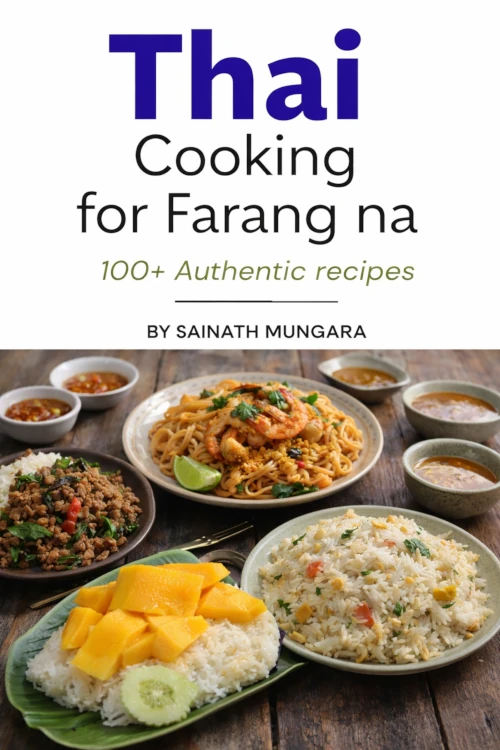
Thai Cooking for Farang Na is the book that came out of that. It covers 100+ recipes including a full chapter on noodle dishes — pad thai, pad see ew, pad kee mao, and others — with the substitutions explained, the technique shown in detail, and the reasons behind every step. It’s written specifically for people cooking outside Thailand who want authentic results, not a vague approximation.
👉 Get Thai Cooking for Farang Na on Amazon
Frequently Asked Questions
Can I use rice vermicelli instead of flat rice noodles?
No — the width of the noodle is part of the dish. Vermicelli produces a completely different texture and doesn’t absorb the sauce the same way.
Can I make the sauce in advance?
Yes. The sauce keeps well in a sealed jar in the fridge for up to 3 months. Making a large batch and storing it makes weeknight pad thai genuinely fast.
Why is my pad thai not orange?
Because authentic pad thai isn’t orange. The orange color comes from ketchup or paprika, which are Western additions. Real pad thai ranges from pale golden to light brown depending on the sauce quantities used.
Can I substitute soy sauce for fish sauce?
You can, but the dish becomes something different. Fish sauce provides fermented umami depth that soy sauce doesn’t replicate. If you can’t use fish sauce, use a combination of light soy sauce and a small amount of miso for more depth.
How do I store leftovers?
Pad thai does not reheat well — the noodles continue absorbing liquid and become soft. Cook only what you’ll eat. If you have leftover prepped ingredients, keep them separate and assemble fresh.
Sainath Mungara is the author of Thai Cooking for Farang Na, 100+ authentic Thai recipes written for the non-Thai home cook. He has lived and cooked across Thailand for over fifteen years.